Common EcoBoost Problems by Generation — and the Parts That Fix Them
The real-world weak points of the 3.5, 2.7 and four-cylinder EcoBoost — cold-start timing rattle, misfire under boost, intercooler condensation stumble, intake-valve carbon and PCV — mapped to the generation they hit and the exact parts that fix each one.
Parts for This Job at a Glance

Ford EcoBoost owners

Restoring boost or chasing more power

Owners wanting more power and monitoring

Ford EcoBoost owners
Restoring boost or chasing more power
| # | Product | Owner Reviews | Availability | Best For | |
|---|---|---|---|---|---|
| 1 | 1,450 | $24.99 In Stock at Amazon | Ford EcoBoost owners | ||
| 2 | 159 | $125.98 In Stock at Amazon | Restoring boost or chasing more power | Buy on Amazon
Prime Eligible
| |
| 3 | 358 | $63.59 In Stock at Amazon | Owners wanting more power and monitoring | ||
| 4 | 17 | In Stock at Amazon | Ford EcoBoost owners | ||
| 5 | 161 | $56.79 In Stock at Amazon | Restoring boost or chasing more power | Buy on Amazon
Prime Eligible
|
Every engine family has its known weak points, and the EcoBoost is no different. The good news is that after more than a decade of these turbo trucks on the road, the failure modes are extremely well documented — none of them are mysteries. This is the hub: the recurring EcoBoost problems, which generation each one tends to hit, and the exact part that fixes it. Each problem links to a full deep-dive guide if you want the complete walkthrough.
If you’re not sure which engine you have, start with the EcoBoost generations and fitment reference and the 2.7 vs 3.5 EcoBoost breakdown so you order parts for the right truck — the 3.5, 2.7, and four-cylinder EcoBoosts share design ideas but not part numbers.
The Cold-Start Timing Chain Rattle
The symptom: a brief, marbles-in-a-can rattle for the first second or two after a cold start, then silence. Often paired with correlation codes P0016 / P0017 (and P0018 / P0019 on the V6).
The cause: the timing chain stretches with miles, and there’s a short window at startup before oil pressure loads the hydraulic tensioner. A stretched chain slaps the guides in that window — that’s the rattle. Worn cam phasers add to it.
Why it matters: the EcoBoost is an interference engine. A chain that jumps a tooth can let valves meet pistons, turning a maintenance job into a teardown. The rattle is the cheap warning before the expensive failure.
The fix: reset the entire front-of-engine timing assembly at once — chains, guides, tensioners, phasers and VCT solenoids together. A Camshaft Holding Tool Kit Fit for Ford 3.5L & 3.7L 4V Engines,… puts every one of those in a single matched box, and the job needs the correct camshaft-holding tool to keep the cams in time while the chain comes off. Full walkthrough: the timing chain rattle and cam phaser guide.
Hits hardest on: the 2011-2016 Gen1 3.5, and any high-mile EcoBoost run on tired oil.
Misfire and Stumble Under Boost
The symptom: a stumble, jerk or flashing check-engine light when you get on the throttle and the turbos spool — often worse under load than at idle, sometimes cylinder-specific codes (P0301-P0306).
The cause: boost is hard on ignition. As coils and plugs wear, they can fire fine at idle but break down under the higher cylinder pressure of boost, so the misfire shows up exactly when you ask for power. Worn plugs with a wide gap make it worse.
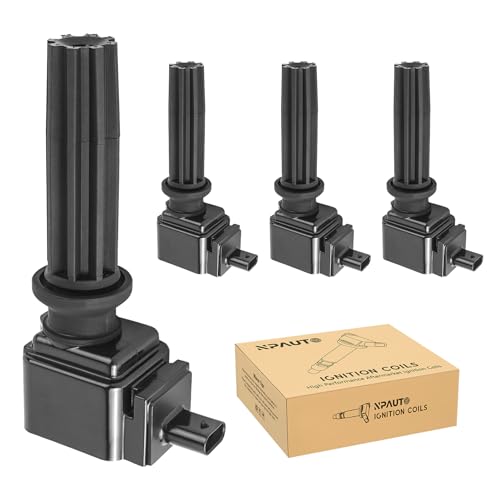
The fix: fresh coils and correctly gapped plugs — and on a boosted engine, do the full set rather than chasing one cylinder. A six-pack coil-and-iridium-plug set for the 3.5 refreshes the whole ignition system in one go; the four-cylinder 2.0/2.3 EcoBoost uses a set of four coils. Full diagnosis and gap guidance: the ignition coils and spark plugs guide.
Hits: every EcoBoost eventually — it’s wear, not a design flaw — and sooner on tuned trucks running more boost.
The Intercooler Condensation Stumble
The symptom: a momentary stumble, hesitation or even limp mode at wide-open throttle on cold, humid days — and only then. Warm and dry, the truck is fine.
The cause: moisture condenses inside the air-to-air intercooler when it’s cold and damp. Go to full throttle and the rush of air picks that pooled water up and dumps it into the engine all at once, causing a brief misfire that can trip a code. It’s the single most talked-about early-3.5 quirk.
The fix: Ford addressed it with PCM calibration updates and hardware revisions, and the intake side benefits from a properly sealed, condensation-managed charge-air path. If you’re upgrading the intercooler or charge pipes anyway, understand the tradeoffs first — a bigger core holds more air and can hold more condensation if the airflow isn’t managed. The full picture is in the intercooler and charge-pipe guide, and the intercoolers category and charge pipes category list the hardware.
Hits hardest on: the 2011-2016 Gen1 3.5 F-150, in cold-climate use.
Intake-Valve Carbon Buildup
The symptom: gradual power loss, rough cold idle, or a slight misfire that creeps in over tens of thousands of miles — no single dramatic event, just an engine that doesn’t breathe as freely as it used to.
The cause: direct injection sprays fuel straight into the cylinder, so unlike a port-injected engine, no fuel ever washes over the back of the intake valves. Oil vapor routed through the PCV system bakes onto those dry valves and, over time, builds a carbon crust that restricts airflow.
The fix: intercept the oil vapor before it reaches the valves with a quality oil catch can / air-oil separator, and keep the PCV system healthy. Severe existing buildup is cleaned by walnut-blasting the valves; a catch can is the preventive measure that keeps it from coming back. Full detail: the oil catch can and crankcase guide.
Hits: the direct-injection EcoBoosts; the later engines that added port injection are far less prone to it.
PCV and Crankcase Ventilation Failures
The symptom: a whistle or hiss under the hood, oil consumption, oil in the intake tract, rough idle, or a lean code — the PCV system managing crankcase pressure has failed or clogged.
The cause: the PCV (positive crankcase ventilation) assembly routes blow-by gases back into the intake to be reburned. When the valve or its hose assembly cracks or clogs — a known wear item on the 3.5 — you get a vacuum leak or unmanaged crankcase pressure, and the oil vapor problem above gets worse.
The fix: replace the PCV assembly with the correct part. The 3.5 EcoBoost PCV valve and hose assembly (HL3Z-6A664-A) is the direct-fit unit for the 2017-2024 3.5. It pairs naturally with a catch can — both manage the same crankcase vapor. See the oil catch can guide for how the two work together.
Hits: the 3.5 EcoBoost as a wear item, typically at higher mileage.
Which Problems Hit Which Generation
Use this as a quick map, then follow the linked guide for the fix. Confirm your exact engine and year in the generations and fitment reference before buying.
- 2011-2016 Gen1 3.5 EcoBoost (F-150): the timing-chain rattle and intercooler condensation stumble are most associated with this run, along with intake-valve carbon (pure direct injection) and, at miles, PCV and ignition wear. It’s the most “known-issues” EcoBoost — and the most rewarding to sort out, because every fix is well established.
- 2015+ 2.7 EcoBoost (F-150): shares the chain-driven timing design and direct injection, so timing and carbon apply, but the 2.7 earned a strong durability reputation. Coils and PCV are the usual wear items. Compare it head-to-head in the 2.7 vs 3.5 guide.
- 2017+ Gen2 3.5 EcoBoost: improved timing hardware and, on later trucks, port-plus-direct injection that cuts the carbon problem. Ignition and PCV remain normal maintenance; the condensation stumble is far less of a story here.
- 2.0 / 2.3 four-cylinder EcoBoost (Focus, Fusion, Mustang, Escape, Edge, Ranger): same chain-driven VCT design and the same ignition wear pattern — but the four-cylinder timing tools and the set-of-four coil pack are engine-specific, not shared with the V6. Tune files split the same way — see the fitment reference before buying anything from the tuners category.
Preventing the Preventable
Most of these problems are accelerated by the same thing: tired oil and stretched service intervals. Chains stretch faster, PCV valves clog sooner, and carbon builds quicker on old oil. The single highest-value habit for an EcoBoost is clean oil on time — the full mileage-interval breakdown is in the maintenance schedule and parts checklist, and a fresh K&N High-Flow Original Lifetime Engine Air Filter: Increase… keeps the airflow the turbos depend on honest.
If you’re building rather than just maintaining, the turbos category and the EcoBoost turbo upgrades guide cover the power side — just know that more boost puts more load on exactly the ignition, timing and PCV systems above, so sort the maintenance first and build on a healthy engine.
New Parts or Genuine OEM?
For complete new kits — a full timing set, a coil-and-plug refresh, a catch can, a PCV assembly — Amazon Automotive is the fast route; use the product cards below to check current fitment and availability.
For genuine Ford / Motorcraft individual parts — a specific phaser, a single VCT solenoid, an OEM intercooler, or Motorcraft DG549 coils — eBay Motors is the marketplace, with new-genuine and low-mile take-off parts listed daily. Use the OEM-parts buttons on this page, and always match the engine and year exactly: the 3.5, 2.7 and four-cylinder EcoBoosts do not share timing, ignition, or intercooler hardware.
Shopping rather than fixing? The EcoBoost years to avoid — and best years to buy reference turns this hub into a used-truck buying checklist, year by year, with the ten-minute pre-purchase inspection that catches most of the items above before you hand over money.
None of these are reasons to fear an EcoBoost. They’re a checklist. Know your generation, know its handful of known issues, keep the oil clean, and fix the one thing that’s actually wrong — and these turbo trucks run a very long way.
Shopping used or OEM? Try eBay Motors
Live listings for the parts covered in this guide — prices set by the seller.
OEM 3.5 timing chain kits — selling now
LIVEReal-time eBay auctions · bids shown are current · tap a card to bid on eBay
Browse every live “ford 3.5 ecoboost timing chain kit OEM phaser” listing on eBay →
Recommended Parts for This Guide
Camshaft Holding Tool Kit Fit for Ford 3.5L & 3.7L 4V Engines, 3.5 EcoBoost | with Tension Tool, Timing Alignment Holder Tool, Replaces 303-1248 303-1530 RT11, with Case and Gloves
1,450 owner reviews
Camshaft Holding Tool Kit Fit for Ford 3.5L & 3.7L 4V Engines, 3.5 EcoBoost | with Tension Tool, Timing Alignment Holder Tool, Replaces 303-1248 303-1530 RT11, with Case and Gloves. A quality upgrade or replacement part for your Ford EcoBoost.
- Fits Ford EcoBoost
- Quality build
Set of 6 Ignition Coil Pack Iridium Spark Plug 3.5 EcoBoost V6 Compatible with Ford F150 F-150 Flex Taurus Explorer Lincoln MKS MKT 2011 2012 2013 2014 2015 2016 2017 3.5L Turbo for DG549 SP534
159 owner reviews
Set of 6 Ignition Coil Pack Iridium Spark Plug 3.5 EcoBoost V6 Compatible with Ford F150 F-150 Flex Taurus Explorer Lincoln MKS MKT 2011 2012 2013 2014 2015 2016 2017 3.5L Turbo for DG549 SP534. Turbocharger hardware for the 2.7 and 3.5 EcoBoost — restore stock boost or step up to a billet-wheel upgrade turbo for more top-end power.
- Restores or adds boost
- Drop-in & upgrade options
EVIL ENERGY Oil Catch Can, Air Oil Separator Compatible with 2011-2025 F-150 5.0L 2017-2023 Raptor 2018-2021 Expedition 3OZ
358 owner reviews
EVIL ENERGY Oil Catch Can, Air Oil Separator Compatible with 2011-2025 F-150 5.0L 2017-2023 Raptor 2018-2021 Expedition 3OZ. Bolt-on performance for the EcoBoost — catch cans, valves, gauges, and pulleys that add power and monitoring.
- Adds power & monitoring
- Protects the DI intake
Ford 2017-2024 3.5L Ecoboost Crank Case PCV Valve Hose Assembly HL3Z-6A664-A KCV294
17 owner reviews
Ford 2017-2024 3.5L Ecoboost Crank Case PCV Valve Hose Assembly HL3Z-6A664-A KCV294. A quality upgrade or replacement part for your Ford EcoBoost.
- Fits Ford EcoBoost
- Quality build
Ignition Coil Pack fit for 2.0T 2.3T Turbo Ford Lincoln (13-19), UF670 | for 2013 2014 2015 2016 2017 2018 2019 Ford Escape, Focus, Fusion, Explorer, Edge Mustang Taurus, Lincoln MKZ MKT MKC, Eco
161 owner reviews
Ignition Coil Pack Set of 4 fit for 2.0 2.3 Turbo 2013 2014 2015 2016 2017 2018 2019 Ford Escape, Focus, Fusion, Explorer, Edge Mustang Taurus, Lincoln MKZ MKT MKC, Ecoboost 2.0T 2.3T, UF670. Turbocharger hardware for the 2.7 and 3.5 EcoBoost — restore stock boost or step up to a billet-wheel upgrade turbo for more top-end power.
- Restores or adds boost
- Drop-in & upgrade options

K&N High-Flow Original Lifetime Engine Air Filter: Increase Power: Premium, Washable: Compatible with 2015-2023 FORD: Mustang, Mustang GT, 33-5029
812 owner reviews
K&N High-Flow Original Lifetime Engine Air Filter: Increase Power: Premium, Washable: Compatible with 2015-2023 FORD: Mustang, Mustang GT, 33-5029. A quality upgrade or replacement part for your Ford EcoBoost.
- Fits Ford EcoBoost
- Quality build